Medical pioneers: An exploration into the remarkable achievements by women in obstetrics and gynaecology


Written By Shreya Kantamneni
Throughout the evolution of medicine and the history of scientific discovery, countless brave and powerful women have navigated through the meanders of deeply entrenched societal norms and gender biases. Prejudices about women’s intellectual capabilities and societal resistance against women entering into the realms of academia have historically eclipsed the brilliant potential of many women. Yet, through the silence of discrimination, women have emerged as resilient pioneers, challenging societal norms and shattering the glass ceilings of historical prejudice. Through this article, we shall explore the triumphs and tangible impact of female medical pioneers in obstetrics and gynaecology, unravelling two fascinating tales of courage, innovation and unwavering commitment that have shaped the
landscape of women’s healthcare.
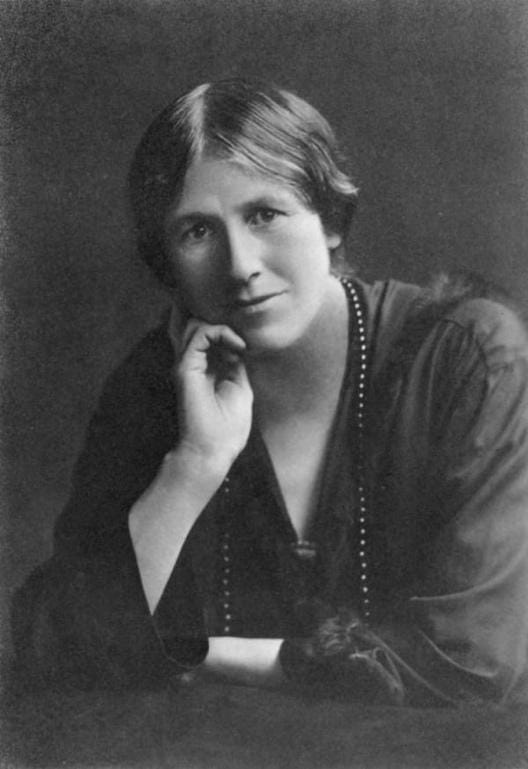
One of the very first female pioneers of obstetrics and gynaecology, symbolising the plight of women gaining equal recognition in an almost entirely male-dominated profession at the time, was Dr Eleanor Davies-Colley FRCS. She studied at the London Royal Free Hospital School of Medicine for Women from 1902 to 1907, which in fact was the first British medical school that allowed women to undergo formal medical training1. The London School of Medicine holds a very special place in the history of UCL Medical School. In 1896, the London Royal Free Hospital School of Medicine became a part of the University of London and by 1947, it was later renamed as the ‘Royal Free Hospital School of Medicine’, after becoming co-educational. After merging with the University College Hospital Medical School in 1998, the Royal Free Hospital School for Medicine was then recognised as the ‘Royal Free and University College Medical School’, to be later renamed to UCL Medical School in 20081-2.
Soon after her qualification, she progressed to embark on the role of house surgeon at the New Hospital for Women (now known as the Elizabeth Garrett Anderson wing of University College Hospital). Over time, her courage and ambitious spirit led her to take on board the duty of senior obstetrician and eventually, in 1911, she became the very first female fellow of the Royal College of Surgeons in England1.
In 1912, just five years after she was officially qualified as a doctor, she became the co-founder of the new South London Hospital for Women and Children in Clapham Common, to which she devoted her entire life – a journey of an illustrious surgical career of nearly thirty years - until she passed away in 1934. The South London Hospital for Women and Children was an all-female-staffed general hospital - designed to provide care for female patients and children and even train female doctors to become specialists at a time when most other hospitals refused to employ them2. Considering that women in England, Scotland and Wales were still not allowed to vote until the implementation of the Representation of the People Act in 1928, the staggering achievements of Dr Davies-Colley speaks volumes. She was able to break through the barriers of gender inequality, challenge the system and passionately advocate for the health of countless women at a time where gender disparity was rife. Her achievements were truly the turning point in obstetrics and gynaecology – it was the starting point for even more groundbreaking achievements to be made by female surgeons within this dynamic specialty.
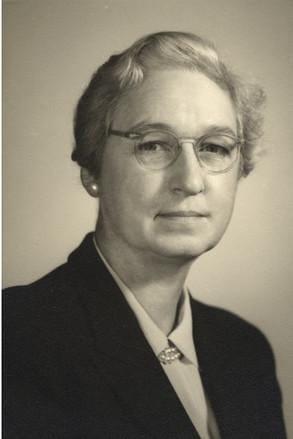
Another notable female figure who has left a significant impact on obstetrics and gynaecology is Dr Virginia Apgar, an American obstetrical anaesthesiologist who is renowned for the “Apgar score”. This scoring system is commonly used to assess in seconds the health of a newborn child at 1 minute and 5 minutes after birth. Apgar noticed that although the infant mortality rate had gone down in the US between the 1930s and the 1950s, the number of
infant deaths within the first 24 hours of life remained stagnant. This motivated Dr Apgar to actively observe, monitor and record the differences that determined whether infants were healthy or required further medical intervention3-4. Consequently, this led her to establish a standardised approach to classify the health of newborn children, now known as the “Apgar score”, which assesses appearance (skin colour), pulse (heart rate), grimace response (reflexes), activity (muscle tone) and respiration (breathing rate and effort). Interestingly, this score is a clever mnemonic which uses the letters ofher own name. Similarly, she also pioneered the use of Rhesus Factor (Rh) testing to assess which women could potentially be at risk of transplacentally transmitting maternal antibodies5. This transmission could be immensely dangerous as it can lead to miscarriage or hydrops fetalis, a life-threatening condition where fluid can accumulate in two or more foetal compartments6. On the whole, Dr Apgar’s ceaseless optimism and relentless determination to reduce infant mortality rates serves as a symbol of dedication to improving maternal health and their newborn’s health. She continued to pursue her ambitions in spite of the challenges stemming from pervasive gender discrimination within society and was committed to providing high standards of care for all her patients.
In the grand tapestry of medical history, the incredible mark left by these two inspirational women is a testament to the resilience, brilliance and unyielding dedication of female physicians worldwide in the field of obstetrics and gynaecology. As we reflect on the narratives of their extraordinary achievements, it is evident that gender knows no bounds in the pursuit of medical and surgical excellence. The legacies forged by such women in medicine are not just mere introductory chapters in a medical textbook. They are anthems of empowerment, heralding a future where medical virtuosity and expertise thrives, irrespective of one’s gender. In celebrating their achievements, we illuminate a path for the aspiring doctors and surgeons of tomorrow – a path of potential, progress and possibility for all.
Read the rest of the edition here.
References:
- Ellis H. Eleanor Davies-Colley: the first woman F.RC.S. J Perioper Pract. 2009;19(3):118–9. doi:10.1177/175045890901900306;ISSUE:ISSUE:DOI PubMed PMID: 19397064.
- Eleanor Davies-Colley (1874–1934) and the South London Hospital for Women (1912-1984) — Royal College of Surgeons [Internet]. [cited 2026 Apr 27]. Available from: https://www.rcseng.ac.uk/library-and-publications/library/blog/eleanor-davies-colle
y-and-the-south-london-hospital-for-women/
- Degrandi Oliveira CR. The legacy of Virginia Apgar. Br J Anaesth. 2020 Mar 1;124(3):e185–6. doi:10.1016/j.bja.2019.12.017 PubMed PMID: 31948680.
- Tan SY, Davis CA. Virginia Apgar (1909-1974): Apgar score innovator. Singapore Med J. 2018 Jul 1;59(7):395. doi:10.11622/SMEDJ.2018091 PubMed PMID: 30109352.
- Simon L v., Shah M, Bragg BN. APGAR Score. StatPearls. 2026 Jan 31;1–6. PubMed PMID: 29262097.
- The Apgar Score. Obstetrics and Gynecology. 2015 Oct 1;126(4):E52–5. doi:10.1097/AOG.0000000000001108 PubMed PMID: 26393460.