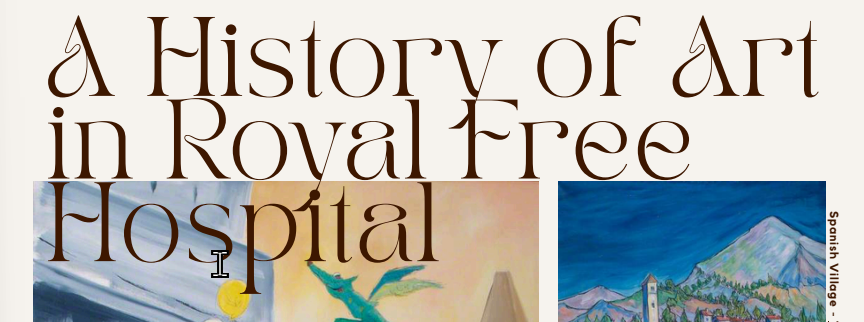
History of Art in the Royal Free Hospital

Written by Rujuta Kulkarni
White walls. Fluorescent lighting. The incessant mechanical beeping of monitors. The constant feeling of worry, anxiety and apprehension. The smell of antiseptics and disinfectants mixed with the scent of medication.
When most people imagine a hospital, this is typically what comes to mind. Sterile - perhaps the only way to describe this scene.
I remember sitting in an A&E waiting room a few years ago, surrounded by these same white, blank walls and harsh lighting. Time seemed to stretch by. Eventually my name was called, and I was brought to the paediatric ward. Suddenly, the walls were no longer white. They were filled with bright colours, playful murals and artwork. Suddenly, it was somehow a little less frightening. It was a small but noticeable change.
As Florence Nightingale said1, “The effect in sickness of beautiful objects, of a variety of objects, and especially of the brilliance of colours is hardly at all appreciated … Variety of form and brilliancy of colour in the objects presented to patients are actual means of recovery.”
The presence of art in hospitals is far from a modern idea, and its role has changed with the times:
- 14th century: Art has existed in European hospitals since at least the start of the 14th Century. At the time, hospitals were closely tied to religious institutes, and so the artwork found in them depicted spiritual and biblical scenes.2
- 18th and 19th centuries: As hospitals increasingly relied on charitable donations, the artwork displayed within them began to reflect this shift. Art hung on the walls held not only an aesthetic purpose but also a political one, honouring wealthy benefactors and sponsors.
- Early 20th century: During World War I, art in hospitals often captured the uneasy atmosphere of the time. Artwork depicted brave soldiers in war, intended to encourage continued support and involvement in national efforts. 3
- Today: A ‘sterile’ aesthetic predominates, with artwork often foregone for plain walls.
However, as medicine advanced rapidly - including the establishment of the NHS - the hospital environment began to change. With medical advancements came a greater demand for in-hospital care, increasing the pressure to prioritise efficiency and effectiveness. This meant leaving behind art, which was merely seen as a source of distraction and aesthetics. White walls, harsh lighting and lack of art became the norm.
Not everyone was quite comfortable with this shift. One such person was Sheridan Russell, who worked at the National Hospital for Neurology and Neurosurgery. Russell was Britain’s first male Almoner and the head Almoner at the hospital, in charge of managing charitable donations, assessing and understanding patients’ financial circumstances. 5 The hospital almoner was, in a sense, an early form of what we would now consider a medical social worker. Having been raised among artists, from musicians, composers and writers, Russell held an immense appreciation for art. He believed that art could have a place even in the hospital. He observed that when art was hung on the walls, it seemed to ease feelings of anxiety and stress, even if only briefly. He came to realise just how important art could be to patients’ health and wellbeing.
In 1959, he founded Paintings in Hospitals, a charity aimed at supporting people’s physical and mental health through art. What began with one man speaking up has now grown into a national programme. Today, Paintings in Hospitals holds more than 3,000 artworks in its collection, distributed to hospitals nationwide. 4
Following the establishment of Paintings in Hospitals, the King’s Fund (an independent charity involved in work related to health and social care in England) also launched its Art in Hospitals scheme in 1979. This initiative focused on commissioning artists across Greater London to create murals, paintings and other artworks in NHS hospitals. For more than 20 years, this scheme supported local artists in transforming the hospital environment to feel less intimidating, warmer and welcoming. 6
These early initiatives have had a lasting effect on hospitals today. For example, they have inspired the Enhancing the Healing Environment programme, which initially focused on improving London’s hospital environments but has now extended to mental health trusts, primary care centres and end-of-life care environments. With 2.5 million in funding, it helped to redesign wards and waiting rooms by using art designs, altering the lighting and layout. 7
There has also been a push for further research into the influence of art in hospitals. In a 2010 review, Lankston et al. explored the impact of art in healthcare environments, finding that landscape and nature art, especially those featuring calming blues and greens, acted as a “positive distraction”.This positive distraction takes away patients’ anxiety and stress by allowing their attention to be drawn elsewhere, creating moments of calm and reflection. 8 Overall, patients had shorter hospital stays, increased pain tolerance and reduced anxiety after exposure to visual art in the hospital. These findings echoed research by Roger Ulrich in 1984, which demonstrated that patients recovering after surgery in rooms with views of trees and nature had around 10% shorter hospital stays, required fewer strong pain medications and overall healed faster than patients with blank, brick wall views. 9
Gradually, a clearer picture emerged: art could be used to transform the spaces in which patients receive care. The colour of the walls and the art that covered them can positively influence patients’ recovery and, therefore, shouldn’t be overlooked.
This impact is not just confined to theory or research - it can be seen in the hospital that many of us medical students become familiar with over our six years. It’s easy to miss the art when we’re rushing between lectures, wards and clinics. But this year, I began to notice the remarkable art collection at the Royal Free Hospital.
The collection includes works by artists such as Noelle Sandwith (the granddaughter of the surgeon William Marsden, who founded the Royal Free Hospital), Maggie Hambling, Ed Grey and many more, ranging from vibrant oils on canvas to intricate pencil sketches. 10
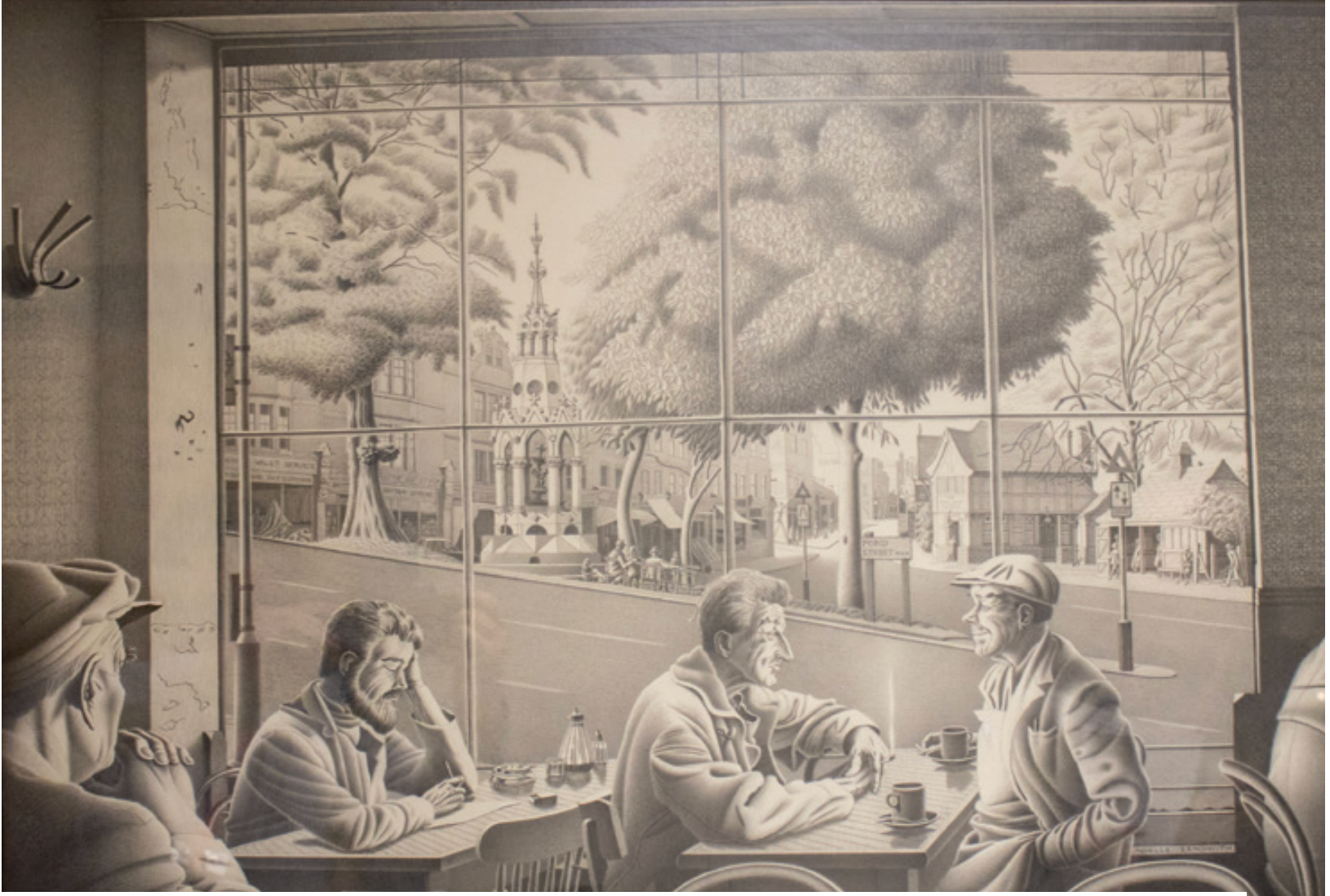
Pond Street Café by Noelle Sandwith
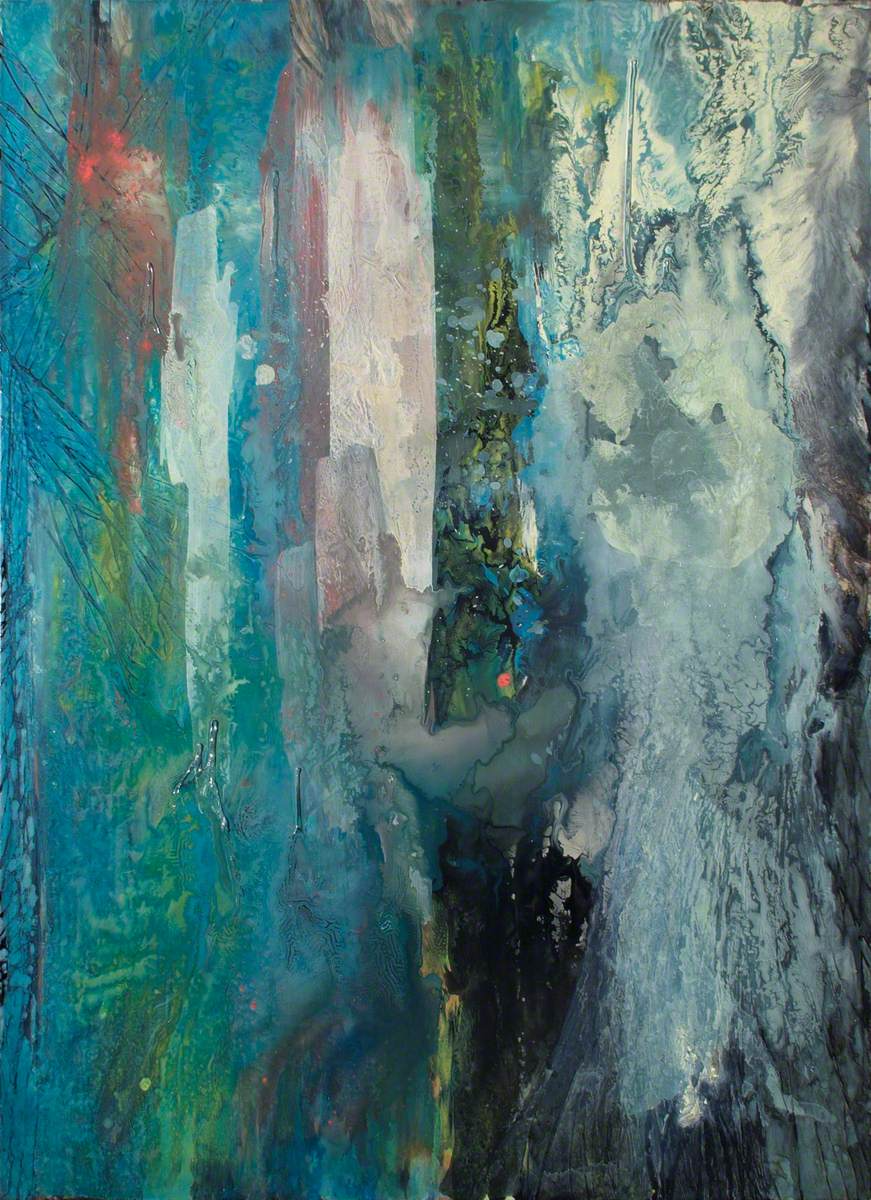
Abstract with Red Spot, by Khaled ('Karl') Ghattas (1958–2007) - located near the medical school library and the outpatient ward.
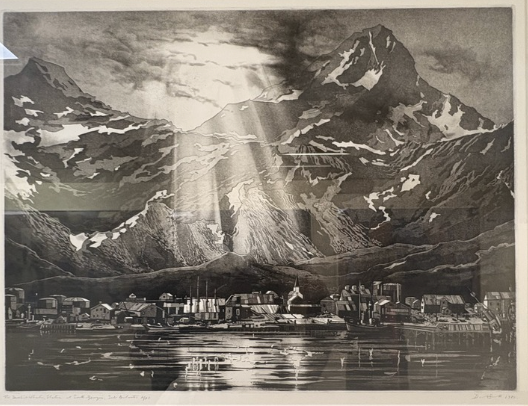
One piece titled the "Abstract with Red Spot” creates the illusion of a landscape constructed from swirls of colours and seemingly haphazard brushstrokes. Unlike a clear depiction of a natural scene, the painting invites the viewer’s interpretation. Another slightly abstract nature scene of a dramatic, black-and-white mountain may have a similar effect. For patients, these kinds of artworks can encourage imagination, reflection and a momentary escape.
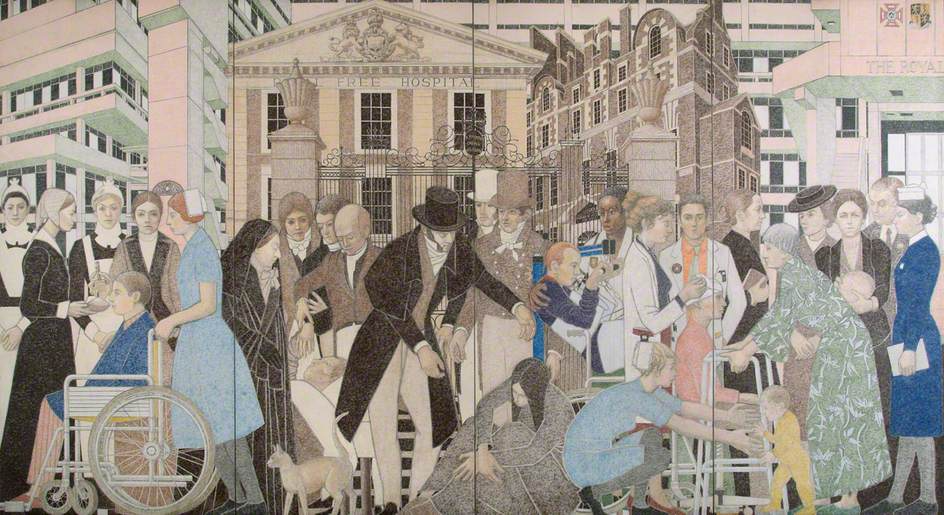
History of the Royal Free Hospital and School of Medicine, by William Utermohlen - located at the Rowland Hill Street entrance to the medical school section.
A permanent fixture of the hospital’s collection is William Utermohlen’s mural “History of Royal Free Hospital and School of Medicine”. The painting depicts pioneers, physicians, and patients who have shaped the history of the hospital. It’s an impressive, large-scale artwork that catches the eye of anyone passing by, inviting people to pause and appreciate the history of the hospital.
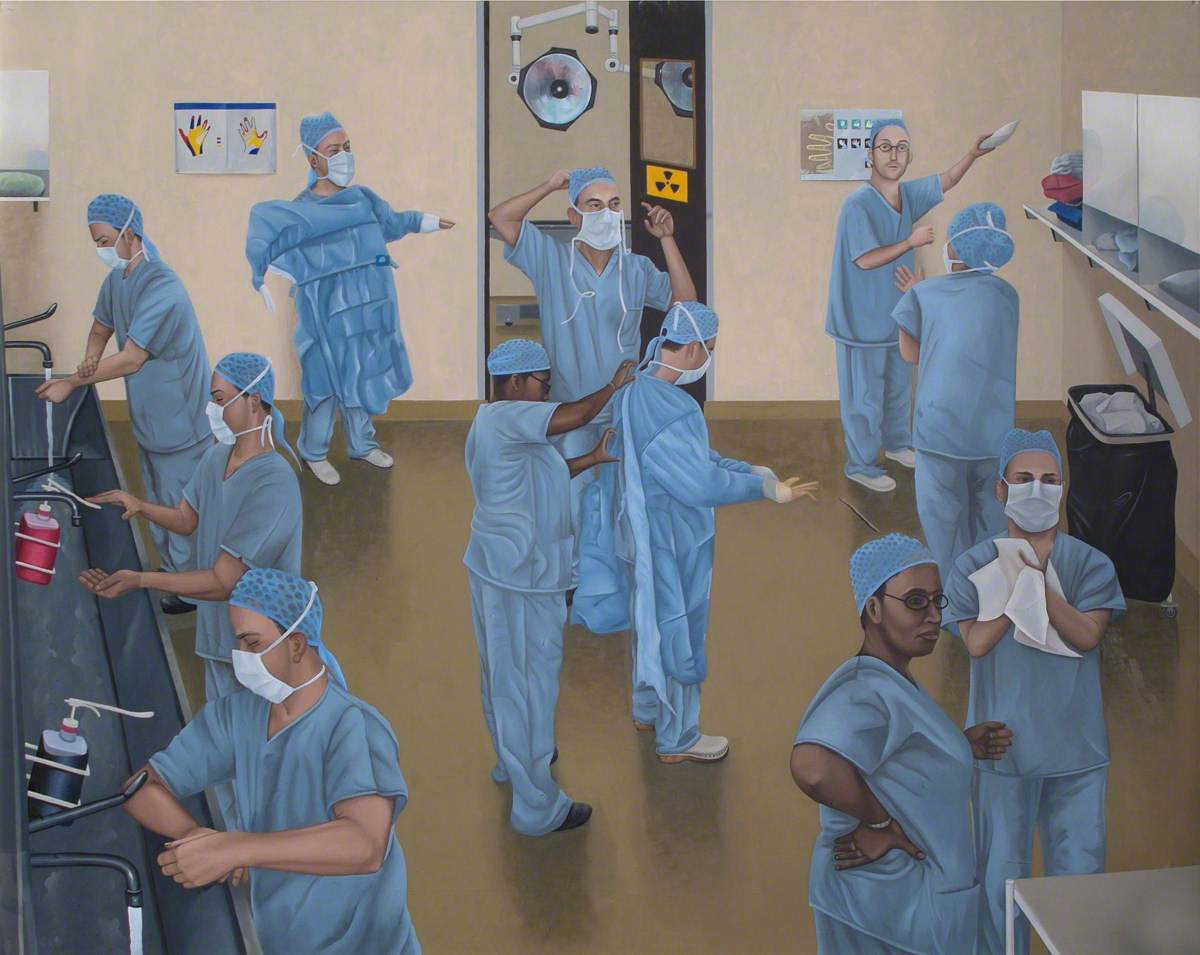
Theatre Prep, by Simon Black - located near the medical school library and the outpatient ward.
Next time you find yourself at the Royal Free, it may be worth taking the time to slow down and look around. Together, these artworks have different meanings, from being a reflection of the history of the hospital, to capturing the hustle and bustle of a healthcare environment, to transporting the viewers outside the hospital to scenes of nature. Yet overall, they seem to have a shared purpose - to help patients’ recovery and healing.
For many people, hospitals are places of fear, uncertainty and moments spent waiting anxiously surrounded by white walls and fluorescent lighting. But I hope this atmosphere can be softened and changed through art. Art in hospitals cannot cure, but it can remind us to pause. To take a breath. To think of life outside of the walls and worries of the hospital. For patients and their families, this is sometimes exactly what they need.
The Royal Free art collection can be further admired through the virtual tour compiled by the Royal Free Charity: Virtual tour to bring art collection to bedside and beyond
Read the rest of the edition here.