And With Mighty Wings Outspread:

Louis Quail on Art, Activism, Mental Health and his Big Brother
Written by Anna Zhang
“Worse than being intruded on is to be ignored,” says artist, activist and brother Louis Quail. He sits on his sofa as we share a beer through Zoom, the casual drink a slicing contrast to the weight of his words as we talk. Quail is a British photographer known for his intimate and unflinching portraits of people and the spaces they inhabit - or are excluded from. His most recent project, Big Brother, is a deeply personal exploration into the life and movements of his brother, Justin, and his struggles with schizophrenia.
Using a combination of Justin’s artwork, poetry, medical records and police reports, Quail balances documentary realism with an intensity and tender grit born out of their fraternal dialogue, exploring themes of marginalisation, systemic injustice, liberation and love in a fierce book that calls for change. It is with great privilege that I am able to share this space with Louis as we discuss key ideas shaping the landscape of mental health advocacy, while also celebrating the life and loves of his brother, Justin.
Sidelined and Silenced
Quail’s frustration with the way his brother has been treated is evident throughout our conversation - a murky reflection of the prejudice that still shrouds mental illness. “People like Justin, they’ve been ignored their whole lives because as a society we don’t know how to talk about mental health. Especially something like schizophrenia where the condition can be quite severe, the whole illness is ghettoised. It’s only when something awful happens and you read about it on the front page of a tabloid newspaper do people talk about it, and then it's always associated with violence. You get tired of it, that kind of reductive stigmatisation, you don’t see the whole person.” He describes a time when Justin was arrested for ‘criminal damage to a cigarette.’ “It’s off the scale stuff like that, and that’s what’s so disappointing about the system. Common sense doesn’t seem to be able to get through the door, meanwhile Justin is in court.” We laugh at the absurdity of these charges, but there is an undeniable sadness that sits between us.
“Stigma is everywhere. It’s somebody complaining on the bus that Justin smells or accusing him of being something horrible in the pub just from the way he looks. It’s also in the medical profession, which I find quite distressing. In his medical notes, a nurse wrote that Justin drank milk from a baby’s bottle. At that time Justin was in a hostel, he was probably smelling, it was a really inappropriate place for him to be. You can imagine people not wanting him there so they’re gonna complain about him. But then you get these lines written down which are just floating accusations. There’s no evidence, it’s just someone’s allegation, but now it’s written down it looks like a fact and I found this really horrible. You can see here how quickly stigma can become dangerous.”
He speaks also of his own judgments. “I took Justin to a poetry evening he used to go to ten to fifteen years ago and I saw a side of him completely explode. He had this excitement and really thoughtful, reflective engagement, and I just thought ‘I didn’t know how important this was to you Justin!’ If you don’t fully realise the potential of your own brother then in a way you’re stigmatising them too, and if I can be guilty of it, we all can.”
Mental Health: A Cinderella Service
“It’s death by a thousand cuts,” says Quail when asked about the challenges facing mental health services. “Justin and our mother, who also struggled with schizophrenia, would go to the Mereway Day Centre for 23 years where they’d take part in all these activities. Then one day some politician decided we couldn’t afford it anymore and it shut down. The Level Crossing Centre in Mortlake closed down too, and so did one on Kew Foot Road. It’s like bang, bang, bang, now where can Justin go? There are still a few places but anything dedicated and specific went a long time ago. We used to have these amazing roundtable meetings with a regular psychiatrist every three months, now all we get is a locum if we’re lucky.”
The Mereway Day Centre closed in 2007 amid a wave of funding cuts for mental health trusts, a theme that has followed us into 2025, with charities such as Mind criticising the most recent NHS Planning Guidance for neglecting the funding mismatch between demand and spending. NHS England reports that one in four adults experience mental illness with rates of treatment access up 33% between 2019 and 2023. Yet between 2022 and 2023, the NHS planned to spend 8.1% of its total budget on mental health services. This lack of parity between mental and physical health is explosive, and it's the patients and their families who suffer. “Resources that were once pumped into social services are now diverted into the criminal justice system, and instead of accessing care in the community, those people are taken to prison. We’re still spending money on mentally ill people, but we’re not treating them, we’re locking them up.” Louis talks about Justin’s girlfriend Jackie, who faces her own challenges, and their abrasive experience with the police. “If Justin and Jackie have a falling out and Jackie doesn’t know how to handle it, she’ll call the police because social services aren’t there anymore. Then Justin will be bailed not to see her for a month which he’ll break when she asks him to come visit. The police officers are trying their best, but they’re not really there for people like Justin and Jackie and the two just end up lost in the system.”
Slow Activism: what can we learn from Justin?
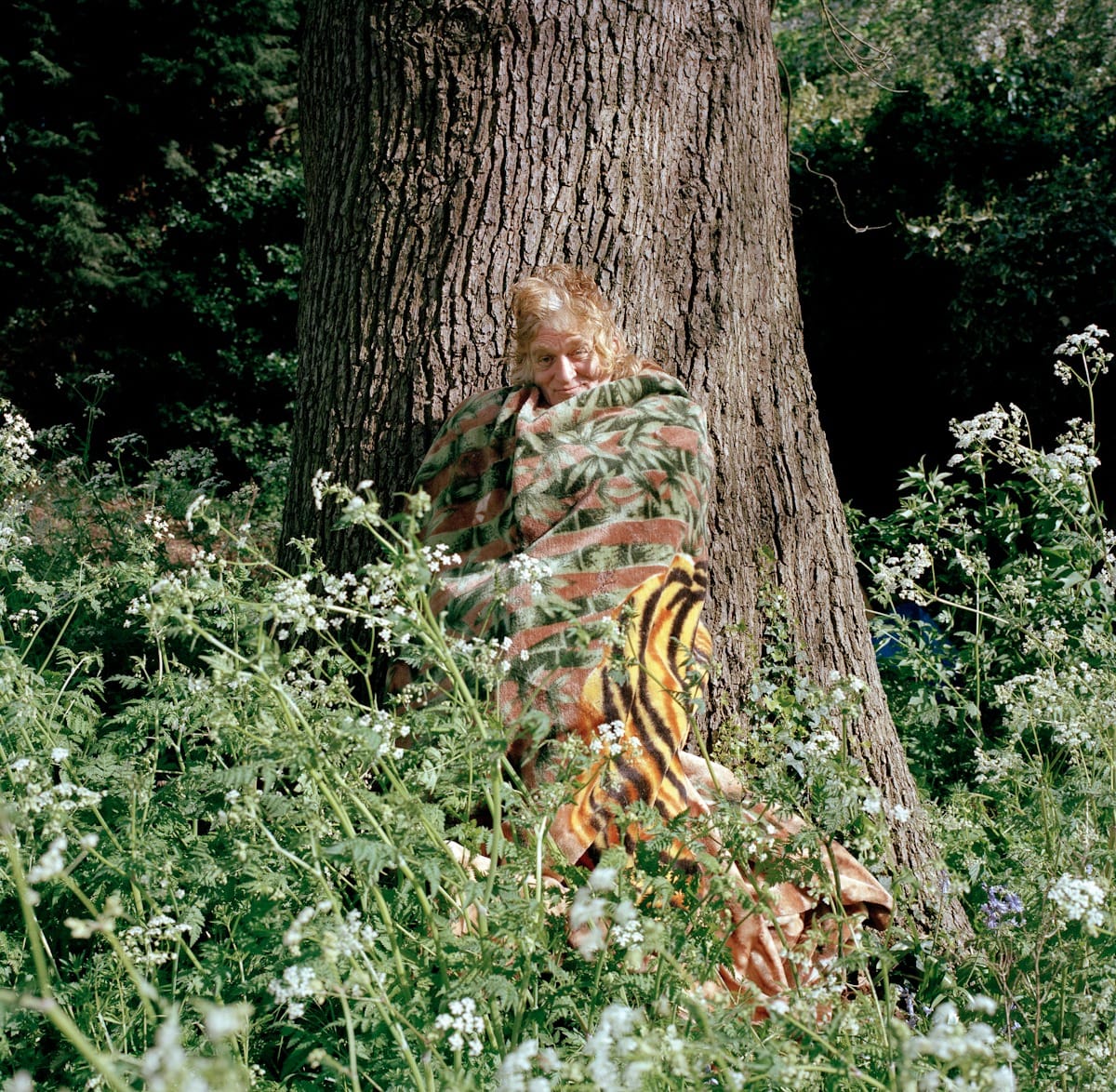
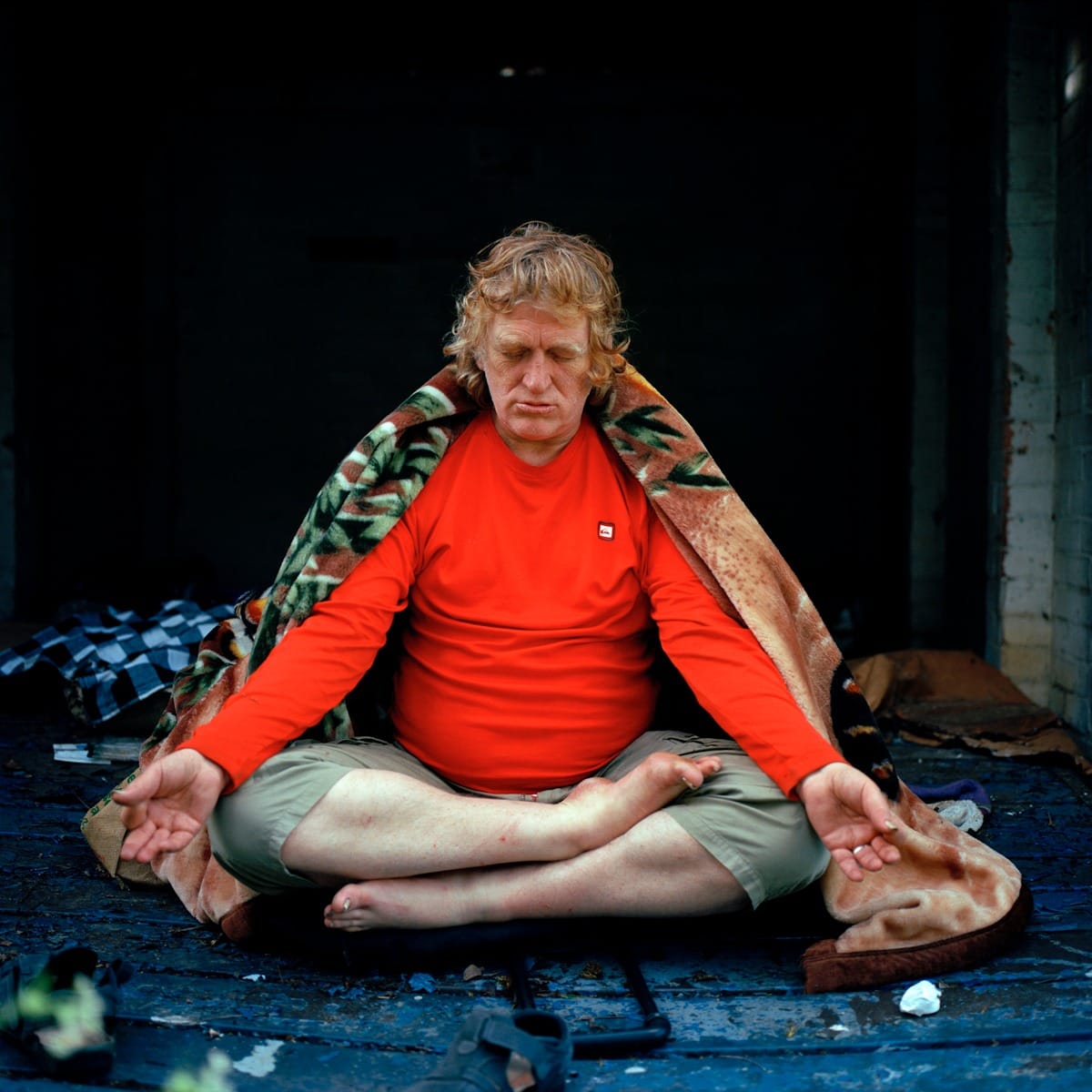
“It’s a bit like a depot injection that bleeds into Justin’s bum every three weeks, when you use art as a form of activism. I like to call it slow activism. You draw your audience in with compelling photographs or poetry, and before they realize it they’ve gone through the entire book and taken in concepts which are quite difficult to talk about.” This struck me when I first saw Louis talk in his annual lecture to second year students at the medical school here at UCL. There was something about Justin in his love for birdwatching and his poetry that is powerfully authentic in its perpendicularity to the constraints of a nine-to-five society. There is a photograph in the book of Justin sitting at the foot of a large tree, wrapped in a blanket of earth colours and surrounded by what looks like cow parsley. Louis writes: “He is high on life, his mind is whirring with chaotic thoughts, excitement and a constant flow of ideas.” We see this in Justin’s poetry: ‘Mrs Neat and Mr Tidy, you’re so incomplete without your diary,' and 'Is it the spirit of Blake or Milton leading every man’s heart to heaven?'
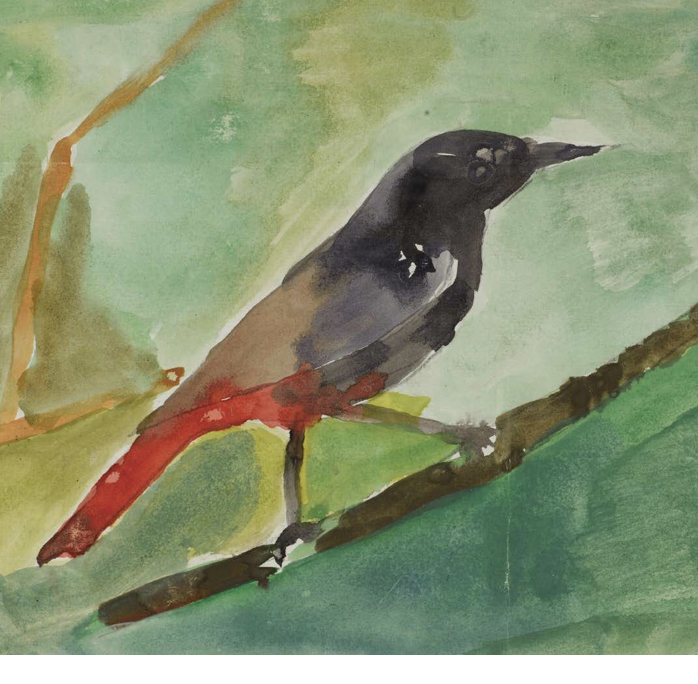
“He’s not straightforward, it could never have been a PR number where you go ‘Oh look at this lovely schizophrenic!’ If he didn’t have three siblings looking after him he’d probably be in jail.” Yet in this imperfection there also breathes a type of existence, of ‘living in the moment’ and a connection with nature that we can all learn from, that reminds us to pause and recognise the angles missed when conforming to the same linear plane. “You know, if you can’t access the services that you need and the drugs aren’t working for you, go get yourself a pair of binoculars.”
Hope, Change and a New Culture of Care
“I think we need to get back to this idea of one doctor looking after the same patient.” We end by talking about Louis’s hopes, for Justin and for the future of healthcare. “At the moment we get any doctor or social worker and then we get a pool of responses two weeks later. I certainly see the pressure when you’re a GP and you’ve got 10 minutes, it’s brutal, but we have to find the most efficient way of treating people in terms of humanity, not as a spreadsheet. You lose sight of the whole patient otherwise.” He tells me about a psychiatrist who worked with Justin for five years. “He knew Justin wasn’t a dangerous person because he knew the context where another doctor might have locked him up. It saves money too, and I think it’s certainly better for patients. They’re understood.”
Yet, amongst this system of chaos, Big Brother is a story of love and of hope - the final page: an image of Justin and Jackie walking off into the distance together. “What I love about talking to you guys is that I get to see the excitement of a whole new generation of doctors who, in 10 or 20 years time, will be in positions of power where you can have a massive impact. The hope is that you guys find the energy and use your cleverness to navigate a new system, you know, to fight back.”
“To make it better for us as people.”
With thanks to Louis, Jackie, Justin, and his birds.
Read the rest of the edition here